







sample books
 packaging
 magnetic boxes
 drawer boxes
 rigid box with lid
 cuffed boxes
 slipcase boxes
 suitcases and chests
 clamshell boxes
 oblique boxes
 round tube boxes
 flat-folding boxes
 folder BOX
 decorative boxes
 chocolate boxes
 cosmetics boxes
 gift boxes
 alcohol and wine boxes
 boxes for CBD
 boxes with a window
 eco friendly boxes
 jewellery boxes
 binders
 folders
 clipboards
 stands
- premium products
 eco products
- other
Waterfall, book-style, or fan-out sample books – which model will best showcase your product?
A sample book is a brand's most important salesperson—it works in the showroom, on the negotiation table, and in a representative's bag long before the first word about price is spoken. Its construction must stem from two premises simultaneously: the physics of the material it presents and the way the customer makes a purchasing decision. Ignoring even one of these factors ensures that even the most carefully crafted sample book stops selling.
Book-style sample books – a classic album with space for a narrative
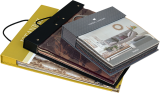
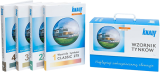
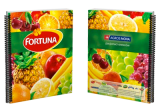
The album format is a solution bound in bookbinding boards, providing samples with a stable, prestigious background. Samples are mounted on cards, leaving room for technical descriptions, certifications, and visual inspirations. This system works best as a fabric sample book or for:
- flat and thin materials – fabrics, roller blinds, veneers, laminates,
- recipients such as designers or architects working at a desk,
- brands that want to build high perceived value from the very first contact.
A solid binding signals quality before the customer even touches the first sample. The disadvantage is the weight and dimensions – this type of sample book rarely travels well in the field.
Waterfall sample books – showcasing structure and color depth
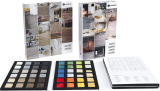
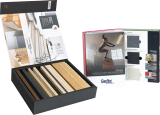
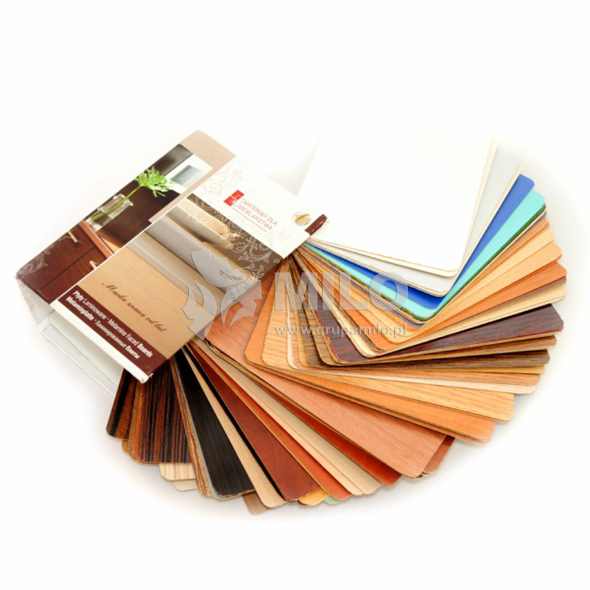
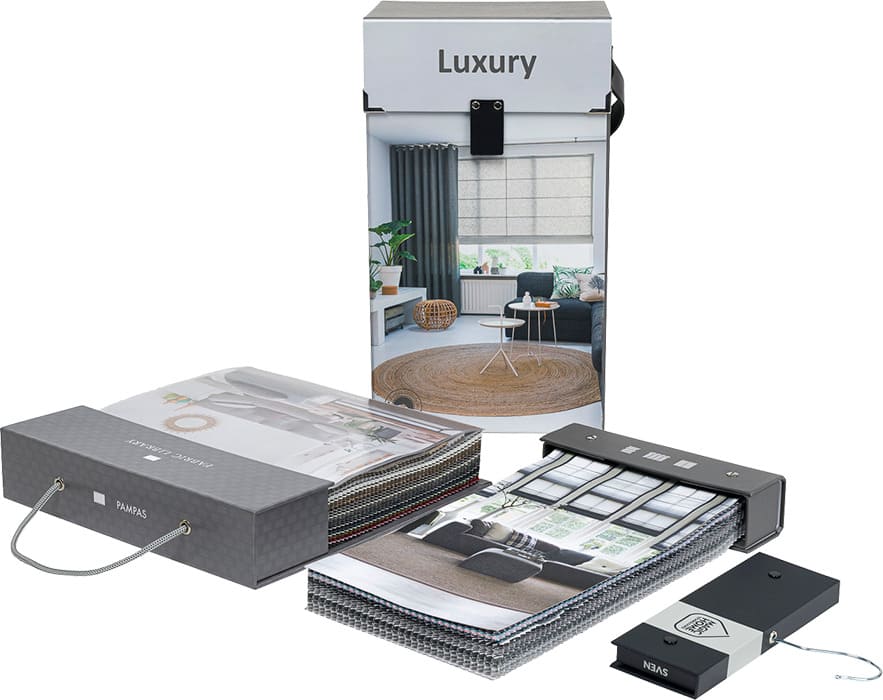
In a waterfall (cascading) system, samples overlap in layers, revealing the edge of each element. This solution is designed for materials where texture and color depth are key selling points. A single slide of the hand allows for the comparison of shades in natural or artificial light – the angle of light then reveals the 3D structure in a way that no photograph can capture.
This format is perfect as a sample book for stone and ceramics or a sample folder for wood, especially for:
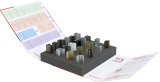
The manufacturing precision of the connecting mechanism determines whether the movement is smooth and whether heavier samples (e.g., in a sample book with foam) do not deform under their own weight.
Sample folders – mobility without compromise
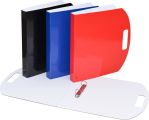
When a product is sold by a mobile representative, quick access to the right sample is what matters most. A sample folder with pockets or dividers responds exactly to this scenario – it fits in a bag, allows for categorical organization of samples, and is easy to update without replacing the entire carrier.
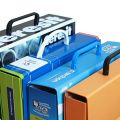
We offer sample folders in many variants, including premium box folders and versions with dividers. The compact format reduces the unit cost for larger production runs for distribution networks, although the texture display is less dramatic than in a waterfall system.
Helpful checklist – before you decide on a sample book format
Before choosing a sample book, answer a few questions:
- Thickness and weight of the sample – materials over 3 mm are better showcased by a waterfall sample book or a sample book with foam than a standard album,
- Potential mobility – will the sample book be stationary in a showroom or work with a salesperson in the field?
- Is 3D structure a selling point? – if so, the waterfall system is unrivaled,
- Number of samples and updateability – a sample folder with dividers makes it easier to replace elements without redesigning the whole unit.
Need help choosing the right sample book format?
Our experts are here for you!
Contact us
Refinements that increase the visual value of a sample book
Regardless of the chosen system, the finish of the cover and the fastening mechanisms directly influence how the customer perceives the brand. At MILO, we apply solutions such as:
- velvet foil (soft-touch effect),
- scratch-resistant structural foil,
- UV varnish to emphasize color depth,
- hot stamping – gold and silver foiling with an embossing option.
Each of these solutions strengthens the visual consistency of the sample book with the brand identity.
Your sample book – from engineering design to sales success
Choosing a sample book format is a process where engineering meets aesthetics. At MILO, we ensure this synergy is visible at every stage – from the first sketch in the conceptual design, through the precise selection of refinements, to the final sample assembly. A well-chosen system is not just a container for your product; it is a sales tool that supports sales representatives and builds customer trust with every interaction with the material.
MILO Group
- +48 71 322 14 44
- info@milogroup.eu
- ul. Stawowa 7-9, 55-002 Dobrzykowice - Wrocław, Poland


© Grupa MILO. Wykonanie: 
sample books
- packaging
- magnetic boxes
- drawer boxes
- rigid box with lid
- cuffed boxes
- slipcase boxes
- suitcases and chests
- clamshell boxes
- oblique boxes
- round tube boxes
- flat-folding boxes
- folder BOX
- decorative boxes
- chocolate boxes
- cosmetics boxes
- gift boxes
- alcohol and wine boxes
- boxes for CBD
- boxes with a window
- eco friendly boxes
- jewellery boxes
- binders
- folders
- clipboards
- stands
- premium products
- eco products
- other